

Student Score Reporting
Smarter Balanced for ELA and Mathematics
Final student scale scores represent the ability estimates for students. For Smarter Balanced Summative Assessments, once the responses from the CAT and PT portions are merged for final scoring, the resulting ability estimates are based on the responses to the specific test items that a student answered, not the total number of items answered correctly. Higher ability estimates are associated with students who correctly answer more difficult and more discriminating items; lower ability estimates are associated with students who correctly answer easier and less discriminating items. Two students can arrive at the same scale score by very different paths. This type of scoring is called “item pattern scoring.”
Reporting Achievement
CAASPP Smarter Balanced assessments for ELA and mathematics were scaled vertically, which means that scores between adjacent grade levels were linked through certain items that were common. This makes it possible to monitor students’ year-to-year progress in relation to the CCSS.
Overall Achievement Levels
Overall achievement levels are categorical labels given to particular scale score ranges. The minimum and maximum scale scores for each achievement level vary for grade level and content area; these are presented in the Smarter Balanced Summative Assessments—Current Test Administration subsection of Appendix A: Scale Score Ranges. Achievement levels were set during a process called standard setting, which established the association between scores and their category of achievement.
Table 1 lists the four Smarter Balanced for ELA reporting achievement levels and describes the skills a student demonstrates at each level.
| Level | Label | Achievement Level Descriptor |
|---|---|---|
|
Level 4 |
Advanced |
The student demonstrates advanced grade-level knowledge and skills and shows a sophisticated understanding of and ability to apply the knowledge and skills in English language arts/literacy needed for success in future coursework. |
|
Level 3 |
Proficient |
The student demonstrates proficient grade-level knowledge and skills and shows a thorough understanding of and ability to apply the knowledge and skills in English language arts/literacy needed for success in future coursework. |
|
Level 2 |
Developing |
The student demonstrates developing grade-level knowledge and skills and shows an initial understanding of and ability to apply the knowledge and skills in English language arts/literacy needed for success in future coursework. |
|
Level 1 |
Minimal |
The student demonstrates minimal grade-level knowledge and skills and shows a limited understanding of and ability to apply the knowledge and skills in English language arts/literacy needed for success in future coursework. |
Table 2 lists the four Smarter Balanced for Mathematics reporting achievement levels and describes the skills a student demonstrates at each level.
| Level | Label | Achievement Level Descriptor |
|---|---|---|
|
Level 4 |
Advanced |
The student demonstrates advanced grade-level knowledge and skills and shows a sophisticated understanding of and ability to apply the knowledge and skills in mathematics needed for success in future coursework. |
|
Level 3 |
Proficient |
The student demonstrates proficient grade-level knowledge and skills and shows a thorough understanding of and ability to apply the knowledge and skills in mathematics needed for success in future coursework. |
|
Level 2 |
Developing |
The student demonstrates developing grade-level knowledge and skills and shows an initial understanding of and ability to apply the knowledge and skills in mathematics needed for success in future coursework. |
|
Level 1 |
Minimal |
The student demonstrates minimal grade-level knowledge and skills and shows a limited understanding of and ability to apply the knowledge and skills in mathematics needed for success in future coursework. |
The establishment of achievement levels through the standard setting process ensures alignment with the CCSS. Information on the process can be found on the Reporting Scores web page on the Smarter Balanced Assessment Consortium website.
Claims and Assessment Targets for Smarter Balanced Assessments
The Smarter Balanced content areas of ELA and mathematics are broken down into claims and assessment targets. The claims and targets for each assessment provide a framework for test development (as outlined in the assessment blueprints) as well as for results reporting.
Claims
Claims are evidence-based statements about what students know and can do in relation to the state academic contents standards, as demonstrated by their performance on the assessment.
The four claims for ELA, as taken from the Smarter Balanced Grade Level Tables for All Claims and Assessment Targets and Item Types, are as follows:
- Claim 1: Reading—Students can read closely and analytically to comprehend a range of increasingly complex literary and informational texts.
- Claim 2: Writing—Students can produce effective and well-grounded writing for a range of purposes and audiences.
- Claim 3: Speaking and Listening—Students can employ effective speaking and listening skills for a range of purposes and audiences.
- Claim 4: Research/Inquiry—Students can engage in research and inquiry to investigate topics, and to analyze, integrate, and present information.
The four claims for mathematics, as taken from the Smarter Balanced Claims for the Mathematics Summative Assessments, are as follows:
- Claim 1: Concepts & Procedures—Students can explain and apply mathematical concepts and interpret and carry out mathematical procedures with precision and fluency.
- Claim 2: Problem Solving—Students can solve a range of complex well-posed problems in pure and applied mathematics, making productive use of knowledge and problem solving strategies.
- Claim 3: Communicating Reasoning—Students can clearly and precisely construct viable arguments to support their own reasoning and to critique the reasoning of others.
- Claim 4: Modeling and Data Analysis—Students can analyze complex, real-world scenarios and can construct and use mathematical models to interpret and solve problems.
Targets are the bridge between the content standards and the assessment evidence that supports the claim. Targets ensure sufficiency of evidence to justify each claim. An assessment target defines the grade level–specific knowledge, skill, or ability that students should know or be able to demonstrate within the claim area. For example, the overall claim “Reading” has an assessment target at grade five called “Reasoning and Evidence” that states, “Students can read closely and analytically to comprehend a range of increasingly complex literary and informational texts.”
Claims and their assessment targets are found on the Smarter Content Explorer website. Note that not all assessment targets are tested for all students, given the adaptive nature of the CAT portion of the assessment.
Area (Claim) Performance Levels
Performance on claims and composite claims is reported as one of three levels:
- Above Proficient
- At or Near Proficient
- Below Proficient
Reporting Claims
Performance levels for claims provide supplemental information regarding a student’s strengths or areas for growth. Only three performance levels for claims were developed, since there are fewer items within each claim. Levels, rather than scores, are reported because of the small number of items in each claim—the levels provide a more accurate measurement than the scores would.
A student’s ability, along with the corresponding standard error, is estimated for each claim; this is illustrated in figure 1. Performance levels for claims are based on the distance a student’s performance on the claim is from the Level 3 Proficient achievement level. An interval estimate corresponding to the student’s true performance on the claim is constructed. The interval is defined as being from 1.5 times the standard error below the student’s ability to 1.5 times the standard error above the student’s ability. If the interval contains the Level 3 Proficient criterion value for a particular claim, it indicates the student’s results are near the standard for this claim. If the interval is above the Level 3 Proficient criterion, it would indicate that the student’s results are above the standard. If the interval is below the Level 3 standard, it would indicate that the student’s results are below the standard.
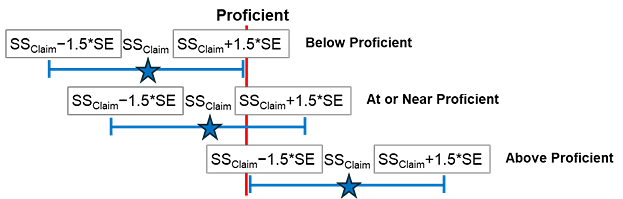
Figure 1. Illustrative diagram for claim performance level classification
No standard setting occurred for claims.
Claim performance levels are based on a smaller collection of items than the overall achievement levels. However, as a result of the adjusted-form test blueprint used for Smarter Balanced Summative Assessments for ELA and mathematics, the number of items for each claim is fewer than were on the previous full-form blueprint, increasing the amount of classification error and making it difficult to provide reliable information about a student’s claim achievement levels. Therefore, beginning with 2020–21 results, individual claim performance levels are not reported for the Smarter Balanced Summative Assessments for ELA and mathematics for individual students. Instead, aggregate claim performance levels are reported for student groups of 30 or more on the Test Results for California’s Assessments website.
Reporting Composites
Composite claim results are reported for individual students on the SSR, in the LEA Student Score Data File, and in CERS, as well as for student groups of 11 or more on the Test Results for California’s Assessments website.
For ELA, the claim Reading is combined with the claim Speaking & Listening to report the composite claim of Reading and Listening. The Writing and Research/Inquiry claims are also combined into a Writing and Research composite claim.
The composite claim statements for ELA are as follows:
- Composite Claim 1: Reading and Listening—Students can comprehend, by reading or listening closely and analytically, a range of increasingly complex literary and informational texts.
- Composite Claim 2: Writing and Research—Students can produce organized and focused written texts for a range of purposes and audiences, and can apply research and inquiry skills to investigate topics and analyze, integrate, and present information.
For mathematics, the Concepts and Procedures claim is reported as-is. The Problem Solving, Communicating Reasoning and Modeling, and Data Analysis claims are combined into the Mathematical Practices composite.
The composite claim statements for mathematics are as follows:
- Composite Claim 1: Concepts and Procedures—Students can explain and apply mathematical concepts and interpret and carry out mathematical procedures with precision and fluency.
- Composite Claim 2: Mathematical Practices (Problem Solving, Communicating Reasoning, and Modeling and Data Analysis)—Students can use problem solving strategies and mathematical models to represent, analyze, and solve complex, well‐formed or not yet fully formed problems that are presented in mathematical or real‐world contexts; make productive use of mathematical concepts, procedures, and tools; interpret results; and communicate clearly and precisely about their own reasoning and the reasoning of others.
While the actual composite scores are not reported, the composite performance level on an SSR indicates that the score for a composite is one of the following:
- If the scale score of a composite is above the interval that was estimated using the scale score of the “Proficient” achievement level on the total assessment and the standard error of the domain scale score, the performance level for the composite is “Above Proficient.”
- If the scale score of a composite is within the interval that was estimated using the scale score of the “Proficient” achievement level on the total assessment and the standard error of the composite score, the performance level for the domain is “At or Near Proficient.”
- If the scale score of a composite is below the interval that was estimated using the scale score of the “Proficient” achievement level on the total assessment and the standard error of the composite scale score, the performance level for the domain is “Below Proficient.”
Assessment Targets
Assessment targets describe what is to be tested within a claim and are used to develop test items (questions). Assessment target reports are available in CERS and show target results for groups of students; these are reported as Performance Relative to the Entire Test and Performance Relative to Level 3 (Proficient). Target reports are not available for individual students.
Assessment Target Reports provide information regarding a group’s strengths and weaknesses relative to its achievement on the assessment as a whole and where students’ performance indicates Proficient. For non-WER targets, only those targets with more than 10 items in the pool are included for reporting. To get a score, students must answer at least 10 CAT items and 1 PT. Students who log on to both the CAT and the PT but do not meet this scoring threshold will receive the LOSS and will not be included in the aggregation of target reports. Scores are sent to CERS, which displays only target results for 30 students or more.
While the claims do not vary among grade levels, assessment targets for ELA Claims 1–4 and mathematics Claim 1 are unique to each grade level. Note that assessment targets are reported for mathematics Claim 1 only. For claims 2, 3, and 4, items are intended to emphasize the mathematical practices and so may align with the content included in several mathematics assessment targets. The best common descriptors of the items included in these claims are the claim labels themselves. More information about target reports can be found in the Assessment Target Reports Frequently Asked Questions subsection of the CERS User Guide.
Writing Extended Response
WER scores for ELA performance tasks provide additional information about writing performance for a student. These scores are available on SSRs and in CERS, as well as in the LEA Student Score Data File available for download in TOMS.
The WER scores in the LEA Student Score Data File provide information on how a student scored on the three writing traits—organization/purpose, evidence/elaboration, and conventions—for an essay. The range of WER writing trait scores is from 1–4 for organization/purpose; 1–4 for evidence/elaboration; and 0 (zero) to 2 for conventions.
In addition, CERS and the LEA Student Score Data File provide explanations for a 0 score on the ELA WER items, when applicable, such as that the response was off topic, off purpose, or insufficient. Information on the specifications and rubrics for WER items can be found in the Guidelines and Resources section of the Smarter Balanced Assessment Consortium Test Development & Design web page.
WER condition codes are presented in table 3 and defined in Condition Codes for the ELA Writing Extended Response.
| Condition Code | Reason | Description |
|---|---|---|
|
B |
Blank |
No response |
|
I |
Insufficient |
Use the “I” code when a student has not provided a meaningful response; examples can include
For ELA WER items, use the “I” code for responses previously described and also if
|
|
L |
Nonscorable Language |
A language other than English was used. |
|
T |
Off-Topic for ELA WER Items Only |
|
|
M |
Off-Purpose for ELA WER Items Only |
The student has clearly not written to the purpose designated in the task:
If a response receives the code of “off-purpose,” the student is given a score for the conventions trait while the traits of evidence/elaboration and organization/purpose are not scored. This is different than the other condition codes in that the student has the opportunity to receive some credit for an off-purpose response. |
Because of differing levels of item difficulty, WER raw scores should not be compared between students, grade levels, and test administration years.
California Science Test
Reporting Achievement
The CAST process converts each possible raw score to an ability estimate and then equates the score to the number-right score on a base test form so that scores from different CAST forms are comparable. The number-right scores are then transformed to scale scores, to facilitate score interpretation. If two students take the same CAST form, the higher scale score is given to whomever provides more correct responses.
Overall Achievement Levels
Overall achievement levels are categorical labels given to particular scale score ranges. The minimum and maximum scale scores for each achievement level vary by grade level; these are presented in the California Science Test subsection of Appendix A: Scale Score Ranges. Achievement levels were set during a process called standard setting, which established the association between scores and their category of achievement.
Table 4 lists the four CAST reporting achievement levels and describes the skills a student demonstrates at each level.
| Level | Label | Achievement Level Descriptor |
|---|---|---|
|
Level 4 |
Advanced |
The student demonstrates advanced grade-level knowledge and skills and shows a sophisticated understanding of and ability to apply the knowledge and skills associated with the performance expectations of the California Next Generation Science Standards. |
|
Level 3 |
Proficient |
The student demonstrates proficient grade-level knowledge and skills and shows a thorough understanding of and ability to apply the knowledge and skills associated with the performance expectations of the California Next Generation Science Standards. |
|
Level 2 |
Developing |
The student demonstrates developing grade-level knowledge and skills and shows an initial understanding of and ability to apply the knowledge and skills associated with the performance expectations of the California Next Generation Science Standards. |
|
Level 1 |
Minimal |
The student demonstrates minimal grade-level knowledge and skills and shows a limited understanding of and ability to apply the knowledge and skills associated with the performance expectations of the California Next Generation Science Standards. |
Achievement level setting ensures that the achievement levels align to the CA NGSS. Information about achievement level descriptors and scale score ranges can be found in the “Scores and Results Reporting” section of the CDE California Science Test web page.
Domain (Area) Performance Levels
In addition to achievement levels for the total assessment, domain performance levels for the Earth and Space Sciences, Life Sciences, and Physical Sciences domains are also reported for students who answered enough items in the domain. Students can demonstrate performances associated with the expectations of the CA NGSS through the integration of science and engineering practices, disciplinary core ideas, and crosscutting concepts across the three domains, which are as follows:
- Earth and Space Sciences—Students focus on Earth’s place in the universe, Earth’s systems, and Earth and human activity.
- Life Sciences—Students focus on structures and processes in living things, ecosystems, heredity, and biological evolution.
- Physical Sciences—Students focus on matter and its interactions, motion and stability, energy, and waves and their applications.
Students might receive science domain performance levels for some domain(s) but not the others depending on the number of items they completed for different domains. Science domain performance levels are not reported for students who answered fewer than 10 items for the total assessment.
Domain performance levels are based on a smaller collection of items than the overall achievement levels. This makes it more difficult to provide information about a student’s domain performance level without increasing the amount of classification error. A larger classification error increases the chance that a student could be misclassified as belonging to one performance level when the student actually belongs to another. For this reason, there are only three domain performance levels. While the actual domain scores are not reported, the domain performance level indicates that the score for a domain is one of the following:
- If the scale score of a domain is above the interval that was estimated using the scale score of the “Proficient” achievement level on the total assessment and the standard error of the domain scale score, the performance level for the domain is “Above Proficient.”
- If the scale score of a domain is within the interval that was estimated using the scale score of the “Proficient” achievement level on the total assessment and the standard error of the domain score, the performance level for the domain is “At or Near Proficient.”
- If the scale score of a domain is below the interval that was estimated using the scale score of the “Proficient” achievement level on the total assessment and the standard error of the domain scale score, the performance level for the domain is “Below Proficient.”
CAAs for ELA, Mathematics, and Science
Reporting Achievement
For the CAAs for ELA and mathematics, scale scores reflect estimates of student ability that are based on which items a student correctly answers in a multistage adaptive test setting. A two-stage testing approach adapts the difficulty of an assessment to each student’s ability to achieve a more precise measurement. The first stage consists of a routing test that provides an initial student ability estimate. The second stage consists of an assessment that varies in difficulty depending on that initial ability estimate. A student whose initial ability estimate is high will respond to a second-stage module consisting of difficult items that will help to determine just how high the student’s ability is. A student whose initial ability estimate is low will respond to a second-stage module consisting of less-difficult items. In certain cases where a student does not answer enough items correctly, the student’s assessment will be stopped at the end of Stage 1, in accordance with the DFAs.
For the CAA for Science, once the responses to each embedded PT are merged for the final scoring, the CAA for Science process first converts each possible raw score to an ability estimate so that scores from different forms of the CAA for Science are comparable. The ability estimates are then transformed to scale scores, to facilitate score interpretation. If two students take the same form of the CAA for Science, the higher scale score is given to whomever provides more correct responses.
Overall Achievement Levels
CAA overall achievement levels are categorical labels given to particular scale score ranges. The minimum and maximum scale scores for each achievement level vary for grade level and content area; these are presented in the California Alternate Assessments subsection of Appendix A: Scale Score Ranges. Achievement levels were set during a process called standard setting, which established the association between scores and their category of achievement.
Table 5 lists the three CAA achievement levels and describes the skills a student demonstrates at each level.
| Level | Label | Achievement Level Descriptor |
|---|---|---|
|
Level 3 |
Understanding |
Students at this level demonstrate understanding of core subject matter in the content area. They are actively working with adapted grade-level content that focuses on the essential knowledge and skills and may need occasional prompts and assistance to complete tasks and activities. |
|
Level 2 |
Foundational Understanding |
Students at this level demonstrate foundational understanding of core subject matter in the content area when provided with frequent prompts and supports. They are actively working with adapted grade-level content that focuses on the essential knowledge and skills and may frequently need supports to complete tasks and activities. |
|
Level 1 |
Limited Understanding |
Students at this level demonstrate limited understanding of adapted grade level content that focuses on much of the basic knowledge and skills, even with extensive supports. |
Regardless of the grade level—which is indicated by the first digit of the scale score—the minimum and maximum scale scores for each achievement level are the same within each content area. Standard setting also ensures that the performance levels align to the CCSS and CA NGSS Connectors achievement level descriptors.
California Spanish Assessment
Reporting Achievement
Threshold scores—the minimum scores at Level 2 and Level 3 by grade level or grade band—determine scale score ranges for each achievement level. These were set based on a standard setting that used the 2024–25 operational data for the CSA. The results allow meaningful comparisons between individual students and group comparisons between schools and LEAs.
Overall Achievement Levels
The CSA process converts each possible raw score to an ability estimate and then transforms it to a scale score, to facilitate score interpretation. If two students take the same CSA form, the higher scale score is given to whomever provides more correct responses.
Final student scale scores represent the ability estimates for students. CSA score achievement levels are categorical labels given to particular scale score ranges. The minimum and maximum scale scores for each achievement level vary for grade level and content area; these are presented in the California Spanish Assessment subsection of Appendix A: Scale Score Ranges.
Student test results for the CSA are reported in the following overall achievement levels. These overall achievement levels apply both to students in grades three through eight, who took the reading, writing, and listening domains; as well as to students in the high school grade band (grades nine, ten, eleven, and twelve) who took the reading, writing, listening, and speaking domains.
Table 6 lists the three CSA overall achievement levels and describes the skills a student demonstrates at each level.
| Level | Label | Achievement Level Descriptor |
|---|---|---|
|
Level 3 |
High Degree |
Students at Level 3 demonstrate a high degree of grade-appropriate Spanish literacy in reading, writing, listening, and—for high school only—speaking; and are on track for being literate in Spanish by high school graduation. |
|
Level 2 |
Moderate Degree |
Students at Level 2 demonstrate a moderate degree of grade-appropriate Spanish literacy in reading, writing, listening, and—for high school only—speaking; but require further development to be on track for being literate in Spanish by high school graduation. |
|
Level 1 |
Limited Degree |
Students at Level 1 demonstrate a limited degree of grade-appropriate Spanish literacy in reading, writing, listening, and—for high school only—speaking; and require substantial development before being considered on track for being literate in Spanish by high school graduation. |
Achievement level setting ensures that the achievement levels align to the CCSSeE. Information about achievement level descriptors and scale score ranges can be found in the “Scores and Results Reporting” section of the CDE California Spanish Assessment web page.
Domain Performance Levels
CSA results are also reported as domain performance levels for all students. Students might receive CSA domain performance levels for some domain(s) but not the others if they did not complete any items in that domain.
Table 7 lists the three CSA domain performance levels and describes the skills a student demonstrates at each level.
| Domain | Level 3 | Level 2 | Level 1 |
|---|---|---|---|
|
Listening |
The student is well developed in their ability to use effective listening skills for a range of purposes and audiences. |
The student is progressing in their ability to use effective listening skills for a range of purposes and audiences. |
The student is beginning to demonstrate their ability to use effective listening skills for a range of purposes and audiences. |
|
Reading |
The student is well developed in their ability to read closely and analytically to understand a variety of genres. |
The student is progressing in their ability to read closely and analytically to understand a variety of genres. |
The student is beginning to demonstrate their ability to read closely and analytically to understand a variety of genres. |
|
Writing |
The student is well developed in their ability to produce well-organized, developed, and supported writing for different purposes and audiences. |
The student is progressing in their ability to produce organized, developed, and supported writing for different purposes and audiences. |
The student is beginning to demonstrate their ability to produce organized, developed, and supported writing for different purposes and audiences. |
|
Speaking—high school only |
The student is well developed in their ability to use effective speaking skills to accurately describe and explain ideas for a range of purposes. |
The student is progressing in their ability to use effective speaking skills to accurately describe and explain ideas for a range of purposes. |
The student is beginning to demonstrate their ability to use effective speaking skills to accurately describe and explain ideas for a range of purposes. |
Composite Achievement Levels
Students within the high school grade band also receive an achievement level and score for two CSA composites: oral literacy (combined score for the listening and speaking domains); and written literacy (combined score for the reading and writing domains). A student’s overall score consists of 50 percent from the oral literacy composite and 50 percent from the written literacy composite; if a student does not answer any items in the reading and writing domains, the overall score is calculated using the LOSS for the written literacy composite.
Composite achievement levels are as follows:
- Level 3
- Level 2
- Level 1
Summative ELPAC
The SSR shows the student’s results on the Summative ELPAC, the state assessment of ELP. The Summative ELPAC provides information about the student’s annual progress toward ELP. For example, the student’s 2025–26 Summative ELPAC results can be compared to Summative ELPAC results from as far back as the 2018–19 administration, when available, because the threshold scores and reporting levels are the same.
Reporting Proficiency
Assessments were scaled vertically after the 2017–18 test administration, which means that scores between adjacent grade levels were linked through some items that were common in both grade levels. This makes it possible to monitor students’ year-to-year progress in ELP and to describe student progress over time across grade levels.
ELPAC overall reporting levels are designations given to particular scale score ranges. The minimum and maximum scale scores for each level vary by grade level and grade span. Performance levels for domains are also reported for Listening, Speaking, Reading, and Writing.
Threshold scores—the maximum scores at Level 1, Level 2, and Level 3 by grade level or grade span—determine scale score ranges for each performance level. These were set based on a standard setting and validation study that used the 2017–18 operational data for the Summative ELPAC. The results allow meaningful comparisons between individual students and group comparisons between schools and LEAs across grade levels.
Overall Performance Levels
Summative ELPAC overall performance levels are categorical labels given to particular scale score ranges. The minimum and maximum scale scores for each performance level typically vary for grade level or grade span; these are presented in the Summative ELPAC subsection of Appendix A: Scale Score Ranges. Performance levels for domains are also reported for Listening, Speaking, Reading, and Writing and were set during a process called standard setting, which established the association between scale scores and their category of performance.
Table 8 lists the four Summative ELPAC performance levels and describes what students at each level can typically do.
| Level | Label | Performance Level Descriptor |
|---|---|---|
|
Level 4 |
Well Developed |
Students at this level have well developed English skills.
|
|
Level 3 |
Moderately Developed |
Students at this level have moderately developed English skills.
|
|
Level 2 |
Somewhat Developed |
Students at this level have somewhat developed English skills.
|
|
Level 1 |
Beginning to Develop |
Students at this level are beginning to develop English skills.
|
Performance level–setting ensures that the performance levels align to the 2012 ELD Standards. Information about performance level descriptors and scale score ranges can be found on the CDE Summative ELPAC General PLDs web page.
Composite Reporting Levels
The student’s overall score is a combination of two other scores: an oral language composite score that is comprised of the Listening and Speaking domains; and a written language composite score that is comprised of the Reading and Writing domains. Composite performance is reported using the same four levels as the overall performance:
- Level 4—Well Developed
- Level 3—Moderately Developed
- Level 2—Somewhat Developed
- Level 1—Beginning to Develop
In rare cases where a domain exemption was approved for a student with a disability that precludes the student from testing in one or more domains, the student received a score or scores based on the remaining domain in that composite and all other domains assessed.
Domain Reporting Levels
Domain performance levels are based on a smaller collection of items than the overall and composite levels. This makes it more difficult to provide information about a student’s domain performance without increasing the amount of classification error. A larger classification error increases the chance that a student could be misclassified as belonging to one performance level when the student actually belongs to another. For this reason, there are only three domain performance descriptors.
While the actual domain scores are not reported, the domain performance descriptor indicates that the score for a domain is reported on the Summative ELPAC SSR as one of the following:
- Beginning to Develop
- Somewhat to Moderately Developed
- Well Developed
If a student did not log on to a particular domain assessment and is not exempted, the student received zero points for that domain.
Summative Alternate ELPAC
The SSR shows the student’s results on the Summative Alternate ELPAC, the state assessment of ELP for EL students with the most significant cognitive disabilities. The Summative Alternate ELPAC provides information about the student’s annual progress toward ELP.
Reporting Proficiency
Summative Alternate ELPAC overall reporting levels are designations given to particular scale score ranges. The minimum and maximum scale scores for each level vary by grade level and grade span.
Threshold scores—the maximum scores at Level 1, Level 2, and Level 3 by grade level or grade span—determine scale score ranges for each performance level. These were set based on a standard setting and validation study that used the 2021–22 operational field test data for the Summative Alternate ELPAC. The results allow meaningful comparisons between individual students and group comparisons between schools and LEAs across grade levels.
Overall Performance Levels
Summative Alternate ELPAC overall performance levels are categorical labels given to particular scale score ranges. The minimum and maximum scale scores for each level typically vary for grade level or grade span; these are presented in the Summative Alternate ELPAC subsection of Appendix A: Scale Score Ranges. Performance levels were set during a process called standard setting, which established the association between scale scores and their category of performance.
Table 9 lists the three Summative Alternate ELPAC performance levels and describes what students at each level can typically do.
| Level | Label | Performance Level Descriptor |
|---|---|---|
|
Level 3 |
Fluent English Proficient |
Students at this level are fluent English proficient.
|
|
Level 2 |
Intermediate English learner |
Students at this level are intermediate English learners.
|
|
Level 1 |
Novice English learner |
Students at this level are novice English learners.
|